
Your waste is your income!

Production of pellets and briquettes

Recently, there has been a huge interest in the production of solid biofuel due to a sharp increase in the price of gas and a possible reduction in its supply to consumers.
There are several methods of processing biomass to obtain pellets and briquettes. I want to share my accumulated experience in the production of solid biofuel. At the first stage, one should not make a mistake with the choice of biomass waste processing technology.
There are several technologies for the production of pellets and briquettes. The difference between pellets and briquettes is their shape and size. Pellets, as a rule, have a cylindrical shape with a diameter of 3 mm to 8 mm and a length of 5 mm to 40 mm. Briquettes can have cylindrical, rectangular, oval and other shapes, and the sizes are usually: diameter from 20mm to 100mm and length up to 300mm. I’m talking about the most common sizes and shapes.

So pellets (granules)

Pellets are made on granulators. There are two main types of granulators – with a flat and round matrix.

The flat matrix is a flat metal disk made of high-quality steel with a diameter from 100 mm to 1250 mm and a thickness from 20 mm to 100 mm. The steel from which the matrix is made must have properties of increased wear resistance and the ability to harden within 60 units on the Rockwell hardness scale. Usually it is domestic steel 40X, Swedish HARDOX 500, steel 20CRMN or another brand.

The productivity of the granulator depends on the diameter of the matrix. Granulators with a matrix with a diameter of 1250 mm can produce up to 3 tons of pellets per hour. The leader in the production of such granulators is the German company KAHL. The cost of such a granulator and its peripheral equipment is very high. I know several Ukrainian companies that have spent from 3 to 10 million euros on factories with similar equipment, but there are almost no positive results in 3-4 years. Pellet production is a very complex art. Such equipment requires a high culture of production.

The second type is granulators with a round matrix with a diameter of up to 550 mm. The matrix, as a rule, is made of stainless wear-resistant steel, which is hardened to a hardness of 45-50 kgf according to Rockwell. The productivity of such granulators can reach 3t/hour.

In general, when we talk about productivity, we must differentiate its value from the quality of the raw material, from its composition with ideal preparation of the raw material before feeding it to the granulator. Performance is also significantly affected by the installed power of the electric motor. Brand-name companies producing granulators install a gearbox with torque parameters and a high-efficiency gear ratio that allows you to use the electric motor with optimal power.

Small Ukrainian enterprises usually install the reducer of the rear axle of a truck on the granulator. Such a gearbox is installed on 90% of Chinese granulators. It works, but requires 10-15% more energy consumption.

Granulators with a round matrix have been used for a long time in the CIS for the production of compound feed. These are granulators of the DG and OGM series. Our craftsmen process them for the production of fuel pellets. Actually, it is necessary to make a new matrix for the required raw materials and rolling rollers. The principle of operation of the same type of granulators is similar.

There is a third type of granulator that is not common in the CIS – it is a hybrid of a granulator with a flat and round matrix.

The round matrix is located by the forming channels parallel to the base, and the rolling rollers roll the raw material entering the working bodies of the granulator under its own weight. This model is very popular in China today.

Peripheral equipment

Beginners starting pellet production, as a rule, do not understand that the granulator is 20% of the success of pellet production. Crushing, drying, fine grinding, water preparation, mixing and dosing – these are the processes without which no granulator will work stably. The raw material that will be granulated must be selected especially carefully. In order.

60% of those wishing to start a pelletizing business want to process wood. Large pieces of wood must be chopped to a chip size of no more than 50 mm. This is achieved by different machines depending on the size:

-Horizontal chipper (stationary/mobile)
-Drum crusher (stationary/mobile)
-Shredder (stationary)

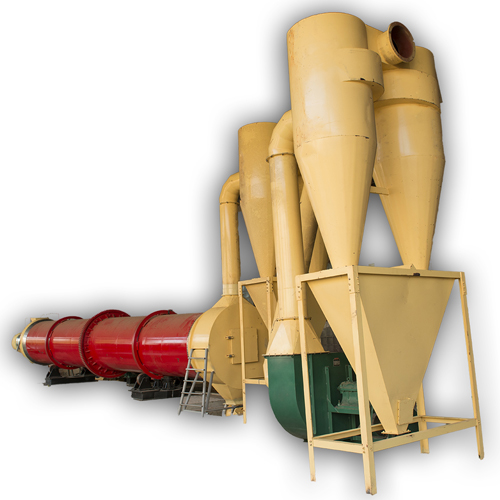
This equipment differs significantly from each other in terms of price and performance. Dryer with cyclone

Drum dryer. The cod must be dried to a moisture content of ≤10%. This is a very complicated process. It should be understood that it is necessary to separate the bound moisture under the influence of temperature from the raw material in the form of steam, and then remove it with a fan from the drying device.

The first thing to know, and this is the basis of the drying process, the raw material must be ≤45% moisture before entering the drying process. With a higher index content, excess steam is formed in the dryer, and the evaporation process slows down to zero.

It is believed that the moisture content of freshly cut wood is 55-60%. After cutting, it should dry naturally, and then it can be sent to the dryer. Or skip the wood twice through drying, which increases the cost

For each type of raw material there is a temperature limit of hot gases at the entrance to the dryer. So, for example, in wheat straw, the pyrolysis process begins at t2000C, and in wood at t4000C. After an intensive process of pyrolysis, the raw material loses its ability to “stick together”, which means that the granule falls apart.
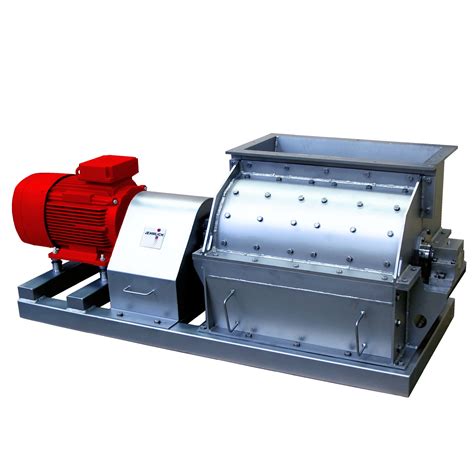
 

Hammer crusher. The less moisture we leave in the raw material (≤10%), the more productive the hammer crusher will work, which should give a fraction equal to 1/2 the diameter of the matrix channel. Yes, if we make pellets with a diameter of 6 mm, then the fraction should be ≤3 mm.

Mixer-dispenser. After the hammer crusher, it is necessary to prepare the raw materials in the mixer-dispenser. Here, it is necessary to moisten the raw material up to approximately 14%, depending on the design of the granulator, the quality of the raw material, and the moisture level is selected experimentally. The raw material is dosed into the granulator.

Parameters affecting the operation of the granulator:

1. The depth of the forming channels of the matrix is selected for each raw material individually. The length of the channel is affected by the density of the granules.

2. The chamfer on the input channel of the matrix (galvanizing) is selected for each raw material.

3. The shape and diameter of the rolling rollers is selected according to the raw material.

4. The revolutions of the main shaft of the granulator, as a rule, lie within 80-120 rpm or the speed of the rollers should be 2.2-2.7 m/sec.

5. The design of the device that does not allow light raw materials to rise from the plane of the matrix (for granulators with a flat matrix).

6. The power of the engine affects the performance of the granulator. The harder the raw material, the more powerful the electric motor is needed.
Raw material for granulation

Most often, people who start a granulation business call about a granulator. When asked what kind of raw materials they are going to pelletize, I am told that there is some wood waste, straw, non-fodder agricultural waste, etc. That is, there is an incompetent opinion that you can throw anything into the granulator and get a pellet. I’ll say it right away – 95% of those who want to produce mixed pellets will fail from such a trick.

My colleagues from Umani have been engaged in straw granulation for many years. They told me that straw of the same type of wheat from different fields is granulated differently. It happens that a certain field is not granulated at all.

Granules (pellets) are produced of two types: for industrial use and domestic according to European standards.

The first are used in industrial furnaces and furnaces. Most often, they are ground into dust before use, and then fed into dust furnaces. This is what they do at Polish CHP plants.

Household pellets are more expensive to produce, but are in demand in Europe. Pellets with a diameter of 6 mm are made from conifers with preliminary bark removal.

I would like to offer several groups of raw materials for granulation:

Easily pelletized
Mixtures of cereals
Alfalfa hay

Badly pelletized
Mixed agricultural waste
Hardwood species
Lignin
Peat
Biomass mixtures

Pelletized
Coniferous wood
Soy box waste
Lentil waste
Sunflower husks
Soy straw

Not recommended
Rice husk (high abrasiveness, low calorific value, high ash content)
Wood of fruit trees, vine (high abrasiveness, requires high strength equipment, sintering during combustion)

Most often, they want to process what they see, for example, reeds. I usually suggest taking 0.5 ha of a cane plantation, weighing it, calculating the cost of harvesting, and you won’t want to pellet it.
We must understand what we want. Our ultimate goal is to sell our product and make a profit. Before starting this business, you need to know how much and what kind of raw materials you will be able to use, to whom and what amount you will be able to sell. After the analysis, select the equipment and draw up a business plan.

I will say once again that the granulation of biofuel pellets is a very complex process. Before you start doing this, approach this issue responsibly, calculate everything.

Briquetting

In my opinion, briquetting is a simpler way to obtain biofuel. Briquette is a coal replacement product, and now it is in great demand in the domestic market of Ukraine.

There are 5 main ways of producing briquettes:

Shock-mechanical – Nielsen
Extrusion with temperature heating – Pini&Kay
Hydraulic type RUF (RUF)
Annular
Extrusion cold method.
One of the common methods of producing briquettes is shock-mechanical. The principle of operation – the crank-connecting mechanism provides movement of the piston, which with a high frequency hits the raw material fed to the output head by the screw dispenser. The output head has such a shape that allows forming a briquette of the desired cylindrical shape. At the exit, the briquette is supported either hydraulically or mechanically. Most often, the section of the briquette movement line from the head to the storage area is more than 10 meters.

The leader among machines for such briquettes is the Danish company C.F. Nielsen, whose equipment can reach a capacity of up to 1.5 tons per hour. The technology requires very good preparation of raw materials (moisture, fraction, homogeneity) and preferably debarked conifers. The equipment of this company is very expensive – about 500,000 USD. This type of pressing is widely used in India and the equipment of this country is of good quality.

Extrusion briquetter Pini&Kay with heating is widespread in Ukraine due to the low cost from 2000USD to 4000USD. The briquette is very beautiful and dense with a hole inside. But this is where all the advantages of this production method end.

To obtain a briquette, the raw material must be dried to a moisture content of less than 8%, which is very problematic. The disadvantage of the technology is the need to grind raw materials to a fine fraction, as well as very low productivity – from 50 kg/h to 200 kg/h. After every 6-8 hours of work, it is necessary to weld the screw of the extruder with wear-resistant metals. As a result, the cost of the briquette is very high.

RUF type briquettes are produced on hydraulic presses of the German company RUF, Latvian RMP and Polish BIZON. Pressure in such machines is created up to 300 bar. For a productivity of 400 kg/h, it is necessary to form a briquette of 15x6x11 mm. Such a product is not in mass demand on the Ukrainian market due to its large size. In addition, the moisture content of the raw material should be less than 14%, and the fraction should be less than 3 mm. Although these presses are the most reliable of all types of this equipment for the production of briquettes, they are very expensive – from €48,000 to €100,000.

Another type of hydraulic presses are the so-called Nestro presses, produced by the German company Nestro Lufttechnik GmbH. They differ from RUF type presses in that the main cylinder counteracting force is an output head with a hydraulic lock. Such indicators as low productivity – an average of 100 kg/h, high requirements for the preparation of raw materials and high cost made this press not widely distributed on the territory of Ukraine, although the briquettes after that have a rather pleasant commercial appearance.

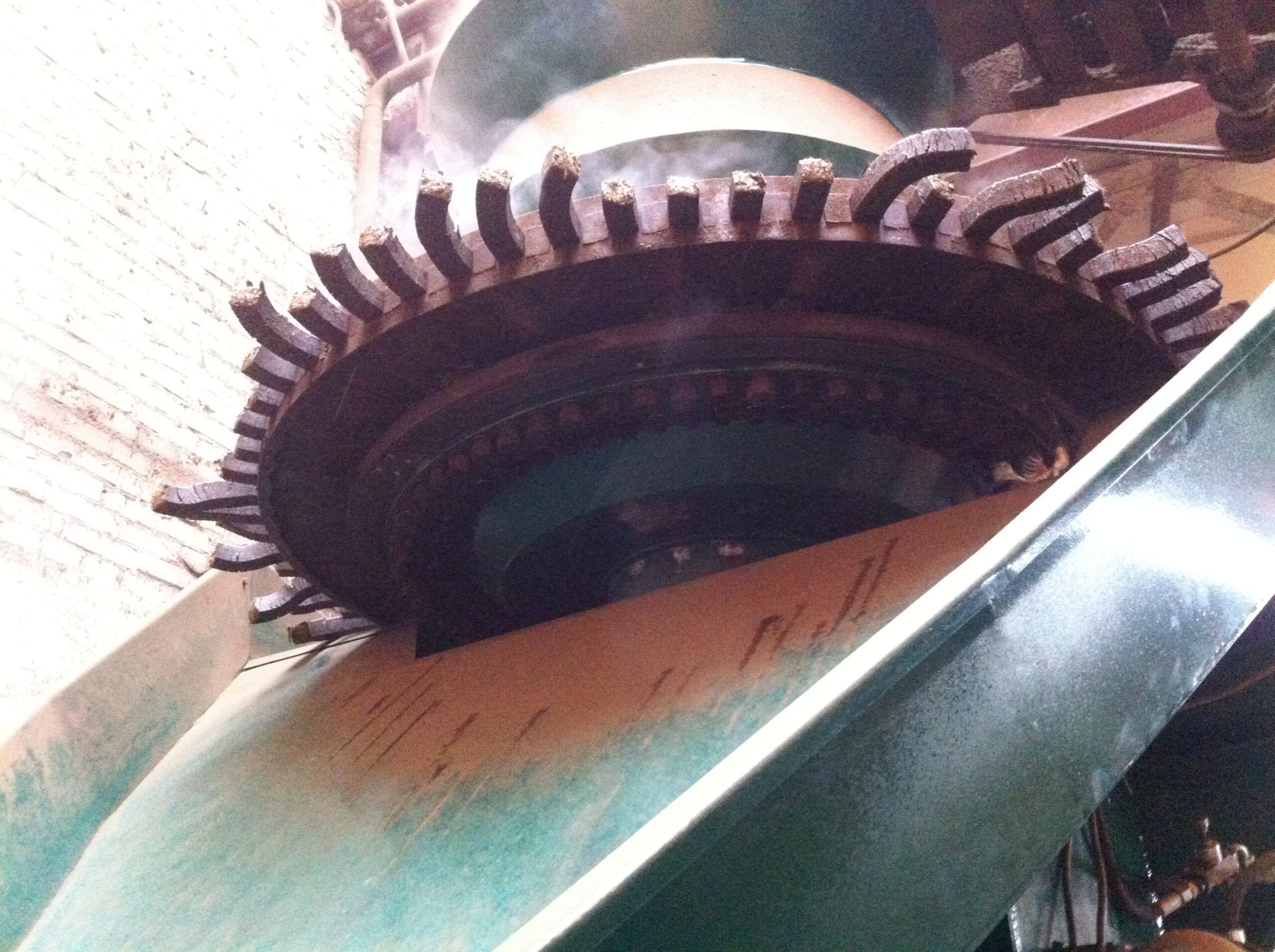
The ring briquetter for 45 matrices with an installed capacity of 60 kW has a productivity of up to 3 tons/hour. This highly efficient briquetter works well on agricultural waste and the minimum requirements for raw materials are a moisture content of 22% to 30% and a straw fraction of up to 60mm.

Briquettes are in demand among the population for the maintenance of home furnaces. The disadvantage is the need to dry the briquettes for 3 to 7 days. For this purpose, the finished briquette is packed in nets at the exit and stacked on 450 kg pallets. The pallets stand for 3-7 days under a canopy until the moisture content in the briquettes reaches 16%.

Such a briquetter “Green Bull” works in the production workshop of the company “Zerma-Ukraine” of the Kherson region on soybean straw. The finished briquette has a cross-sectional size of 32×32 mm. There are no such briquetters in Ukraine. The equipment is relatively inexpensive – 32,000 USD, and the payback period is 5 months. https://www.youtube.com/watch?v=rphI3LwyytI
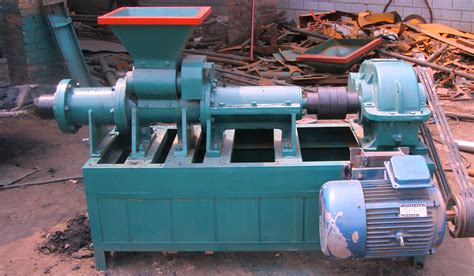
 

Cold extrusion briquetting equipment is well suited for extruding peat, coal dust, soybean straw, sunflower oil waste. At the “Zerma-Ukraine” production site, the “Green Bull” extruder produces briquettes with a diameter of 32 mm and high calorific value from sunflower waste and soybean straw. https://www.youtube.com/watch?v=WMpn5lIIuu4

Positive factors are a low rated power of 32 kW, no need to dry raw materials, high productivity and low labor costs. And the negative factor is the need to grind the straw through a sieve with a cell diameter of 8-10 mm.

When I described the equipment to you, I always talked about moisture and fraction. Remember that peripheral equipment is also important, like the granulator and briquetter.

Grebeniuk Petro Oleksiyovych
m.t.: +38 050 418-52-02